



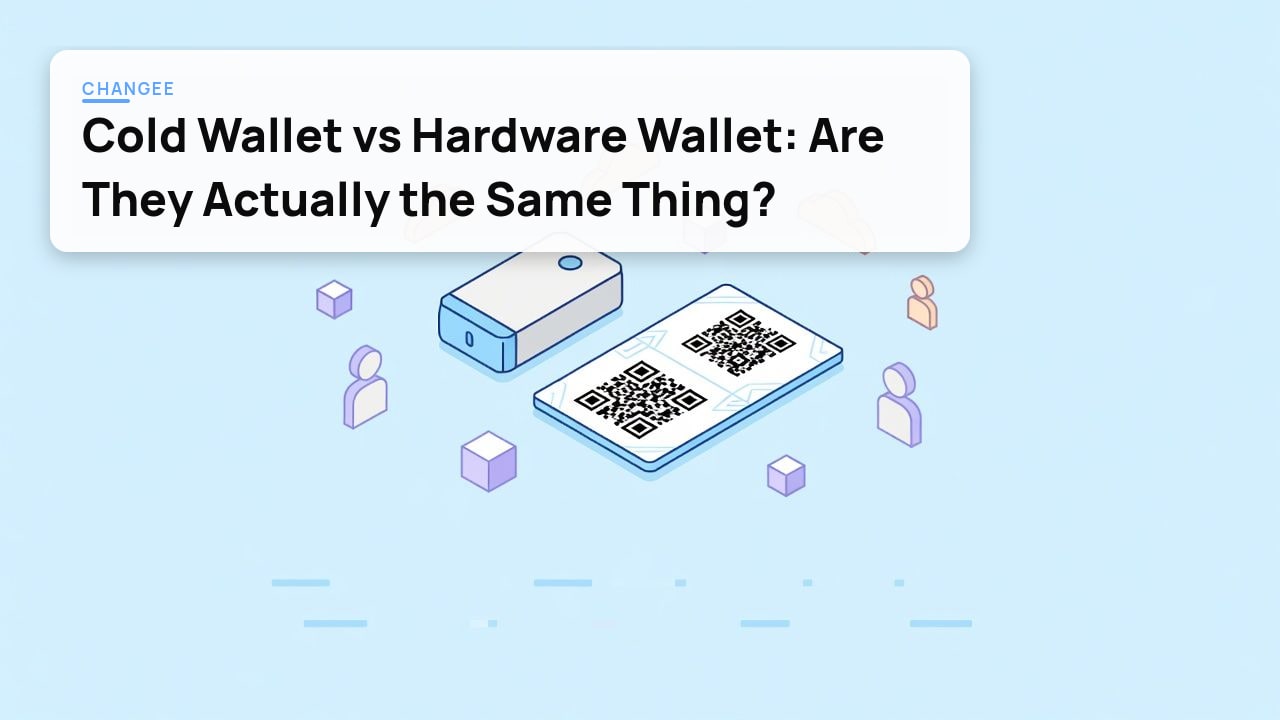
Cold Wallet vs Hardware Wallet: Are They Actually the Same Thing?
What Exactly Counts as a Cold Wallet
A cold wallet is any method of holding cryptocurrency private keys entirely offline on a device or medium that is never connected to the internet. This definition focuses on isolation from remote attack vectors such as malware or phishing rather than the specific form factor.
Common implementations include paper wallets that store printed private keys or QR codes generated on an air-gapped machine, dedicated air-gapped computers used solely for signing, and hardware devices operated in storage-only mode. In each case the private keys remain offline throughout their lifecycle.
Cold wallets support only basic transfers and receipt of funds. They cannot interact with smart contracts or decentralized applications because any such interaction would require exposing the signing process to online interfaces. Ledger’s educational materials note that users can designate specific accounts on a hardware device as storage-only to maintain this strict cold status, while other accounts on the same device handle interactive use.
The category therefore centers on usage patterns rather than hardware alone. A device qualifies as cold storage only while its keys stay disconnected from networks and dApp approvals.
How Hardware Wallets Actually Operate
A hardware wallet is a dedicated physical electronic device, often shaped like a USB drive or equipped with a small screen, that generates private keys inside an isolated secure element chip. All key generation and storage occur on this tamper-resistant hardware rather than on any connected computer or phone.
When a user initiates a transaction, the device receives only the unsigned transaction data through USB or Bluetooth. The secure element then signs the transaction internally using the private key. The completed signature returns to the host software while the key itself remains offline and never exposed.
Users verify the transaction details on the device’s own display before approving the signature. This on-device confirmation prevents malware on the connected machine from altering the intended transfer.
In June 2026 Ledger updated its materials to describe its devices as “signers” rather than hardware wallets. The change emphasizes that the hardware proves user intent by signing messages; the actual cryptocurrency assets stay on the blockchain and are not stored inside the device.
This design supports both simple transfers and interactive approvals while preserving the core guarantee that private keys never leave the secure element.
Where the Two Concepts Overlap and Diverge
Hardware devices function as cold storage when limited to offline holding and simple transfers. The identical device exits that strict category the moment it signs DeFi approvals or dApp transactions, even though private keys never leave the secure element.
| Aspect | Cold Storage Use | Interactive Hardware Use |
|---|---|---|
| Key Storage Method | Offline device or paper wallet generated air-gapped | Secure element inside hardware device, keys never exposed |
| Internet Exposure | Never connected; only basic broadcast via trusted intermediary | Connected via USB or Bluetooth solely for transaction signing |
| dApp Support | None; limited to receive and simple send operations | Full support for smart-contract approvals and DeFi interactions |
| Typical User Workflow | Generate address offline, receive funds, store long-term, broadcast signed transactions infrequently | Connect device, review and approve contract calls or swaps in real time |
Ledger documentation notes that users can segregate accounts on a single device, designating some strictly for cold storage and others for interactive use. Wikipedia groups hardware wallets under cold storage alongside paper wallets, while Trezor materials emphasize their offline key-storage design. The distinction therefore hinges on usage patterns rather than the hardware itself.
Security Trade-offs and Documented Incidents
Both cold wallets and hardware wallets reduce remote attack surfaces by keeping private keys offline, shielding them from malware, phishing, and network exploits. This isolation, however, shifts risk to physical and supply-chain vectors. Device theft, loss, or damage can result in permanent fund loss unless seed phrases are backed up securely, while tampered hardware during manufacturing or delivery could embed backdoors.
Verification of every transaction on the device screen remains essential to confirm recipient addresses and amounts before signing. Skipping this step exposes users even when keys never leave the secure element.
A documented case highlights ongoing software risks: a July 2026 bug in Coinkite cold-wallet devices led to approximately $130 million in losses as of early August 2026. The incident shows that offline status alone does not eliminate all vulnerabilities.
Supply-chain attacks further complicate hardware solutions, as compromised units may appear legitimate until funds disappear. Regular firmware checks and purchases from verified channels help limit exposure, yet no approach removes every physical or logistical threat entirely.
Practical Recommendations for Long-Term Holding
Users can keep a single hardware device while maintaining separation between long-term cold storage and occasional interactive accounts. Ledger documentation notes that accounts on one device can be designated for storage-only versus interactive use.
Begin by creating distinct accounts on the device for each purpose. Label one account strictly for cold storage and generate new addresses only when receiving funds. For every transaction, confirm the exact amount and destination on the device screen before approving. This on-device verification prevents malware from altering details on the connected computer.
Always generate a fresh subaddress for each incoming transfer rather than reusing addresses. Route all wallet software connections through Tor or a reputable VPN to reduce network-level exposure. When signing any transaction, double-check the full details displayed on the hardware screen even if the software interface appears correct.
Store the device itself in a secure physical location and never connect it except for necessary movements of funds. These practices keep the storage account truly offline in practice while allowing the interactive account limited, controlled exposure.
FAQ
Are hardware wallets always cold wallets?
No. Hardware wallets keep private keys offline and sign transactions internally, yet they function as cold wallets only when limited to storage and basic transfers. Connecting them for dApp approvals or DeFi interactions shifts them out of strict cold storage even though the keys never leave the device.
How can users keep a hardware wallet strictly cold?
Segregate accounts on the device so some remain storage-only. Never approve smart-contract calls or connect to decentralized applications from those accounts. Ledger recommends this separation to maintain cold status for long-term holdings.
What occurred in the Coinkite incident?
A July 2026 software bug in Coinkite cold-wallet devices resulted in roughly $130 million in losses by early August 2026, according to Wikipedia updates from August 31, 2026.
How does signing behavior differ between cold and interactive use?
In cold mode the device signs only simple send or receive transactions generated offline. Interactive use requires the device to sign approvals for contracts or dApps while connected, increasing exposure even though keys stay inside the secure element.
When might identity verification apply on related services?
Registration-free swaps on non-custodial platforms such as Changee require no KYC for most swaps. Identity verification may be requested in specific compliance situations flagged by AML screening or transaction monitoring.
Do paper wallets count as cold storage?
Yes. Printed private keys or QR codes generated offline qualify as cold wallets because they never connect to the internet, though they lack the signing convenience of hardware devices.