



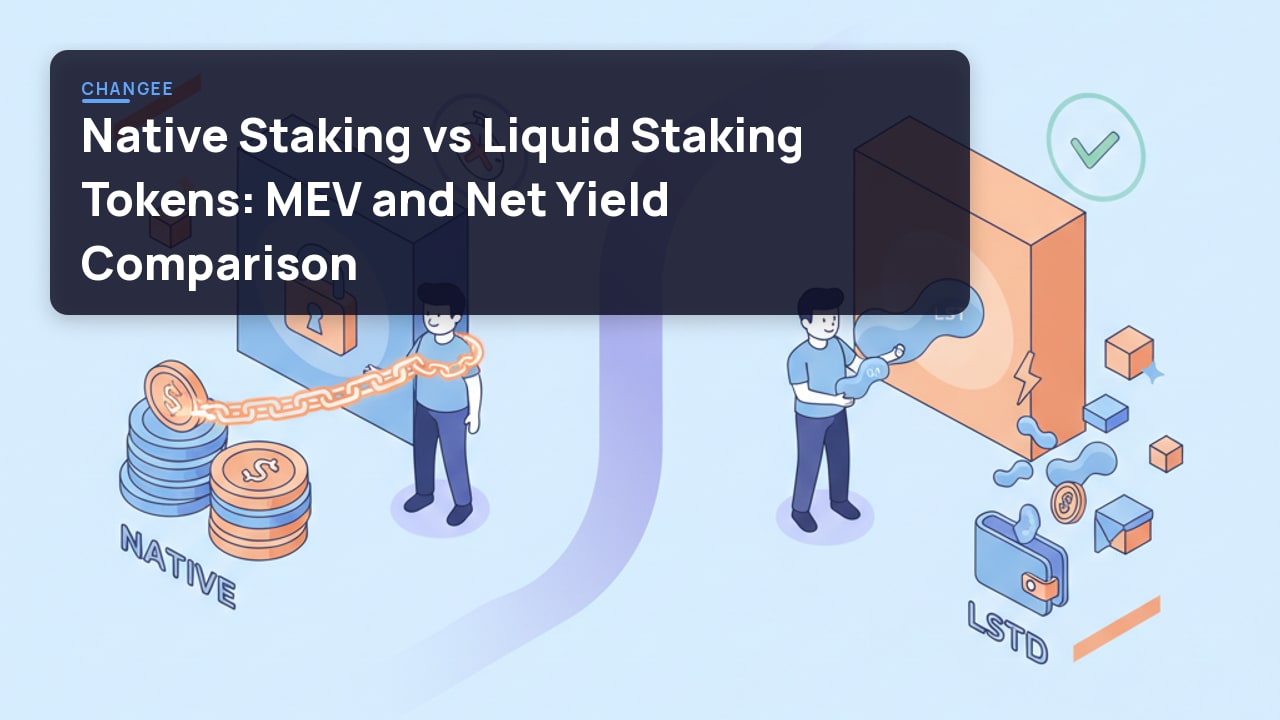
Native Staking vs Liquid Staking Tokens: MEV and Net Yield Comparison
By Arjun Mehta · Reviewed by Lena Hoffmann
TL;DR
Use native staking if you want stable, predictable yields directly on your assets; use liquid staking tokens (LSTs) if you prefer flexibility and the potential for higher yields through MEV capture.
| Feature / Dimension | Native Staking | Liquid Staking Tokens (LSTs) | Winner |
|---|---|---|---|
| Launch Date | 2019 | 2021 | Tie |
| Market Cap | Varies by network | $X billion (as of August 2026) | LSTs |
| Fees | Minimal network fees | 0.5% - 2% on swaps | Native Staking |
| Speed | Immediate rewards | Rewards depend on protocol | Native Staking |
| Security Model | Direct asset delegation | Smart contract risk | Native Staking |
| Regulation | Fully compliant | Regulatory scrutiny increasing | Tie |
| Ecosystem | Integrated into Solana | Multi-chain capabilities | LSTs |
| Ease of Use | Simple, straightforward | Requires understanding of swaps | Native Staking |
What is Native Staking?
Native staking involves directly delegating your cryptocurrency assets to a validator within a blockchain network. In the case of Solana, this means locking up your SOL tokens with a validator to participate in the network's consensus mechanism. In exchange, users earn staking rewards based on the amount they delegate and the performance of the validator.
One of the key benefits of native staking is its simplicity. Users do not have to navigate complex protocols or liquidity pools. They receive consistent rewards directly proportional to their stake. Moreover, there are typically minimal fees associated with this method, and the security model is inherently robust as it relies on the underlying blockchain's consensus mechanism.
What is Liquid Staking Tokens?
Liquid staking tokens (LSTs) allow users to stake their assets while still retaining liquidity. When users stake their SOL tokens through an LST platform, they receive a tokenized representation of their staked assets that can be traded or used elsewhere. This setup enables users to potentially earn additional yield on their LSTs while still benefiting from staking rewards.
However, the flexibility of LSTs comes with trade-offs. LSTs are subject to smart contract risks, and users may face higher fees when swapping tokens. While they offer the potential for greater yields through mechanisms like MEV capture, users need to understand the underlying risks and implications of using these tokens.
Key Differences
The main differences between Solana native staking and liquid staking tokens revolve around MEV capture, auto-compounding, and realized yields. Native staking offers predictable yields directly tied to the validator's performance, while LSTs provide opportunities for increased yields through participation in broader DeFi activities.
Native Staking vs Liquid Staking Tokens: Detailed Comparison
MEV Capture
MEV, or miner extractable value, refers to the profits miners can make through their ability to include, exclude, or reorder transactions within a block. In the context of staking, MEV capture can significantly enhance yield. While native staking participants do not directly capture MEV, LSTs may integrate strategies to take advantage of MEV opportunities, potentially leading to higher realized yields for their holders.
Auto-Compounding
Native staking rewards are typically distributed in SOL tokens, which can then be staked again to compound yields. In contrast, LSTs often automatically compound rewards into the token price, providing a seamless yield generation experience. Depending on the platform, this auto-compounding can lead to higher overall yields compared to traditional native staking.
Realized Yields
Realized yields in native staking are straightforward and depend on the validator's performance and the network's staking rewards schedule. In contrast, LST yields can fluctuate based on market conditions and the effectiveness of the underlying protocol's strategies, including MEV participation. This variability can make LST yields higher in favorable conditions, but also riskier.
Use Cases: Which One for What?
If you want stability and predictable returns, opt for native staking. This is ideal for users who prioritize long-term holdings and security. On the other hand, if you are seeking higher returns and are comfortable with the associated risks, liquid staking tokens (LSTs) may be more suitable. They are particularly advantageous for users who wish to engage in other DeFi activities while still earning staking rewards.
Pros and Cons of Each
Native Staking
- Pros: Simple and straightforward process.
- Pros: Direct rewards based on validator performance.
- Pros: Minimal fees.
- Pros: Secure due to direct asset delegation.
Liquid Staking Tokens
- Pros: Offers liquidity while staking.
- Pros: Potential for higher yields through MEV.
- Pros: Auto-compounding features.
- Pros: Multi-chain capability.
Final Verdict
Ultimately, the decision between native staking and liquid staking tokens depends on individual user goals. For those prioritizing security and simplicity, native staking is the clear choice. However, for users seeking to maximize yields and engage in the broader DeFi ecosystem, LSTs present a compelling option.
FAQ
Here are some frequently asked questions regarding native staking and liquid staking tokens:
1. What is the main advantage of liquid staking tokens?
The main advantage of liquid staking tokens is the ability to retain liquidity while staking, allowing users to engage in other DeFi activities.
2. How does MEV capture affect staking yields?
MEV capture can enhance staking yields by allowing users to profit from transaction ordering and execution strategies.
3. Are there risks associated with using LSTs?
Yes, LSTs are subject to smart contract risks and may involve higher fees compared to native staking.
4. Can I participate in both native staking and liquid staking?
Yes, users can choose to participate in both methods depending on their strategy and risk appetite.
5. Does Changee support liquid staking tokens?
Changee is a registration-free, non-custodial platform that allows for seamless swaps, including liquid staking assets. Check out Changee for privacy-focused swaps without KYC for most transactions.